Create an organization-wide AI direction
Align leadership, product, operations, engineering, data, and business teams around shared priorities and outcomes.
Transform how your organization operates, builds products, serves customers, and makes decisions through a practical, phased approach to AI adoption. At Grayphite, we help businesses move beyond isolated AI experiments and build an organization-wide transformation roadmap. We connect business strategy, workflow redesign, product opportunities, data, technology, governance, infrastructure, and workforce adoption to turn AI into a scalable operational capability.
Your business may need AI transformation when individual teams are experimenting with AI, but the organization lacks a coordinated strategy, shared architecture, governance model, and implementation roadmap.
AI transformation is useful when AI has the potential to affect multiple products, departments, workflows, and customer experiences rather than solving only one isolated problem.

Businesses invest in AI transformation to improve productivity, modernize operations, create differentiated products, and build long-term organizational capabilities around artificial intelligence. Unlike a single AI project, transformation creates a coordinated approach across leadership, people, processes, data, software, infrastructure, and governance.
Align leadership, product, operations, engineering, data, and business teams around shared priorities and outcomes.
Redesign repetitive and knowledge-heavy workflows using AI assistance, automation, search, document intelligence, and agents.
Identify opportunities to create smarter features, personalized experiences, intelligent support, and new digital services.
Establish shared principles for models, vendors, data access, security, infrastructure, evaluation, and system integration.
Define human oversight, access controls, monitoring, auditability, evaluation, data policies, and approval requirements.
Create reusable platforms, skilled teams, governance structures, and operating models that support continued adoption.
Grayphite supports AI transformation across business strategy, operations, products, technology, governance, and organizational adoption.

Define how AI supports business growth, operational efficiency, customer value, competitive advantage, and long-term transformation.

Identify and rank AI use cases across departments, workflows, products, customer journeys, and knowledge-intensive operations.

Redesign processes using AI copilots, automation, agents, document intelligence, search, human review, and role-based enablement.

Identify where existing products can add intelligent capabilities or where new AI-powered products can be created.

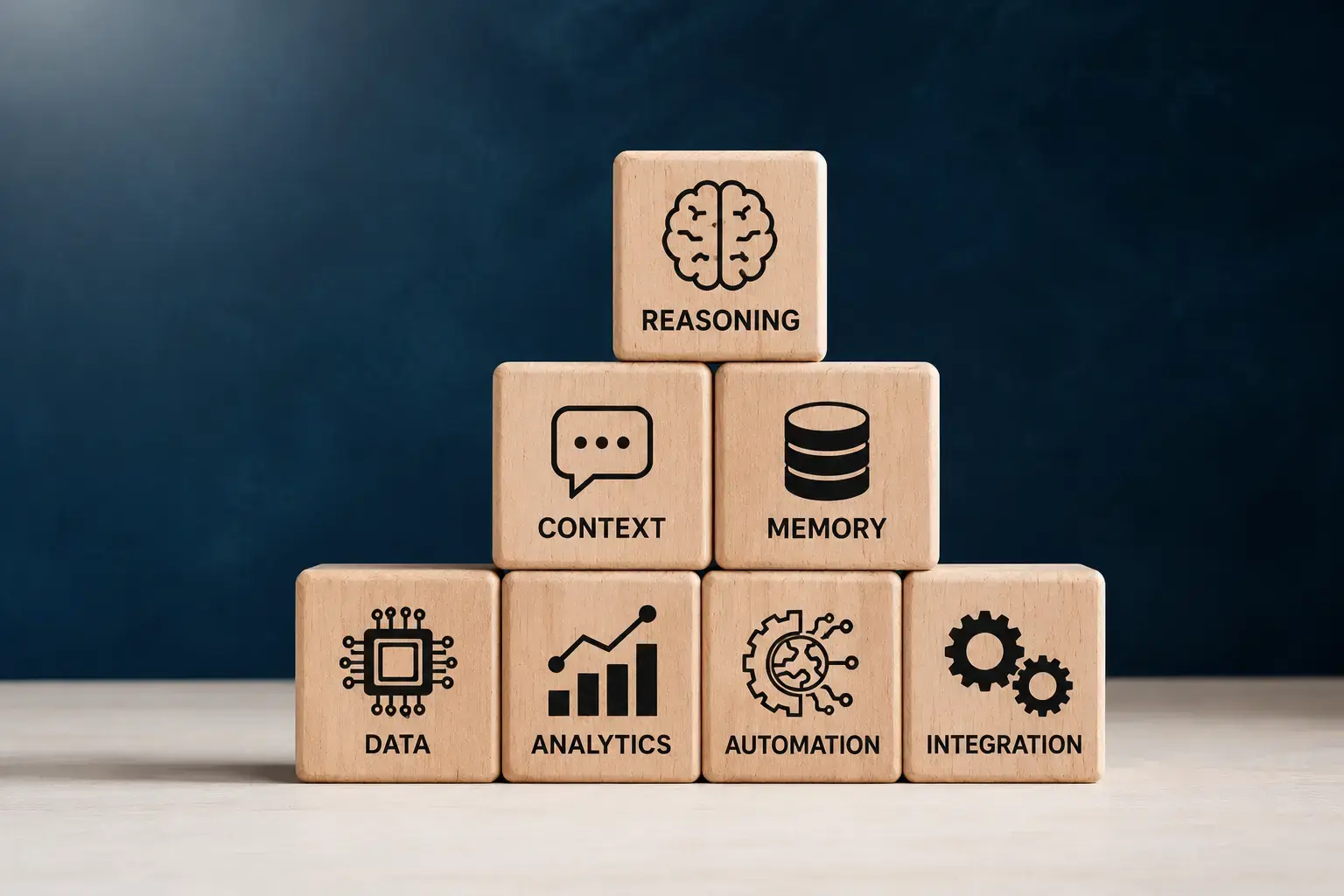
Assess data quality, knowledge sources, software architecture, APIs, cloud environments, integrations, and reusable AI foundations.
Create policies for model usage, data access, privacy, human oversight, monitoring, auditability, evaluation, and escalation.

Launch focused AI initiatives that demonstrate measurable outcomes and create evidence for broader investment.

Support leadership communication, workforce training, user engagement, feedback loops, adoption planning, and transformation governance.